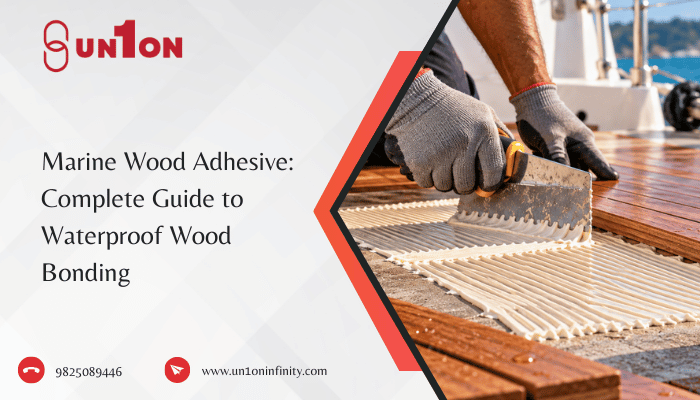
Wood is widely used in boats, marine furniture, outdoor structures, kitchens, bathrooms, plywood panels, and other applications where exposure to moisture is possible. However, ordinary wood glue may not provide sufficient resistance when wood is exposed to water, humidity, condensation, or changing weather conditions.
Choosing the right adhesive is therefore important for creating a durable wood joint. A suitable waterproof formulation can help maintain bond strength when the finished product is exposed to challenging environmental conditions.
This guide explains what marine-grade wood adhesives are, how waterproof bonding works, how to choose the right product, proper application methods, common uses, and mistakes to avoid.
What Is Marine Wood Adhesive?
A marine wood adhesive is an adhesive designed for wood bonding applications where the joint may experience moisture, humidity, water exposure, or changing environmental conditions.
Marine-grade adhesives are commonly selected for applications where ordinary interior wood adhesives may not provide sufficient durability. Depending on the formulation, they may offer strong adhesion, water resistance, flexibility, and long-term performance.
The right product should be selected according to the type of wood, exposure conditions, required bond strength, and application.
| Property | Importance |
| Water resistance | Helps the joint withstand moisture |
| Bond strength | Maintains connection between wood surfaces |
| Flexibility | Helps accommodate minor wood movement |
| Durability | Supports long-term performance |
| Temperature resistance | Useful in changing environmental conditions |
| Substrate compatibility | Ensures proper adhesion |
Always check the manufacturer’s technical data before using an adhesive in a marine or continuously wet environment.
Why Use a Waterproof Wood Adhesive?
Wood is naturally affected by moisture. It can absorb and release water depending on its surrounding environment, causing expansion, contraction, and dimensional changes.
A waterproof adhesive can help maintain the integrity of the bonded joint under suitable conditions.
Some key benefits include:
- Better resistance to moisture
- Improved durability
- Stronger long-term bonding
- Reduced risk of joint separation
- Better performance in humid environments
- Suitable for outdoor and moisture-prone applications
However, waterproof adhesive does not mean that every wood assembly can remain permanently submerged without additional protection. The adhesive should always be selected according to the actual exposure conditions.
What Is the Best Waterproof Adhesive for Plywood?
The most suitable adhesive depends on the plywood type, application, moisture exposure, required strength, and curing conditions.
A waterproof adhesive for plywood should be compatible with the plywood surface and provide the required level of water resistance for the intended application.
Common adhesive categories include:
| Adhesive Type | Key Characteristics | Typical Uses |
| Polyurethane adhesive | Strong adhesion and moisture resistance | Outdoor woodwork and plywood |
| Epoxy adhesive | High strength and durability | Marine and heavy-duty applications |
| Phenolic adhesive | Good durability and water resistance | Exterior and structural plywood |
| Modified polymer adhesive | Flexible and durable | Construction and renovation |
| Marine-grade adhesive | Designed for demanding moisture exposure | Boats and marine woodworking |
For plywood used in demanding environments, check both the plywood manufacturer’s recommendations and the adhesive manufacturer’s technical specifications.
How to Choose the Right Wood Bonding Adhesive
Selecting the right wood bonding adhesive requires looking beyond basic bonding strength. The environmental conditions and characteristics of the wood should also be considered.
1. Consider Moisture Exposure
Determine whether the bonded wood will experience occasional splashes, high humidity, outdoor rain, or continuous water exposure.
2. Check Wood Compatibility
Different woods have different densities, oils, porosity, and surface characteristics. Make sure the adhesive is suitable for the specific wood or plywood.
3. Consider Bond Strength
Furniture, plywood panels, boat components, and structural applications may have different load requirements.
4. Check Flexibility
Wood naturally expands and contracts. An adhesive with suitable flexibility can help accommodate normal movement.
5. Review Curing Time
A longer working time may be useful for large assemblies, while faster curing can benefit smaller projects.
6. Consider Temperature
Outdoor and marine applications may experience significant temperature changes. Check the recommended operating temperature range.
How to Apply Waterproof Adhesive for Plywood
Proper preparation and application are essential for achieving a reliable bond.
Step 1: Prepare the Surfaces
Clean both plywood surfaces and remove dust, grease, oil, loose fibres, and other contaminants.
Step 2: Check the Fit
Position the plywood pieces before applying adhesive. Confirm that the edges and surfaces align correctly.
Step 3: Apply the Adhesive
Apply the recommended quantity using the method specified by the manufacturer. Depending on the product, this may involve a bead, roller, brush, or notched spreader.
Step 4: Join the Surfaces
Bring the plywood surfaces together while the adhesive is within its recommended working time.
Step 5: Apply Suitable Pressure
Clamps, weights, or another suitable method can be used to maintain contact where recommended.
Step 6: Allow Full Curing
Do not expose the joint to excessive moisture or mechanical stress until the adhesive has achieved the recommended cure.
Can Wood Adhesive Withstand Moisture and Humidity?
Yes, some wood adhesives are specifically formulated to withstand moisture and humid conditions. However, the level of resistance varies considerably between products.
A product suitable for occasional humidity may not be appropriate for continuous water exposure or immersion.
| Exposure Condition | Adhesive Requirement |
| Normal indoor humidity | Standard suitable wood adhesive |
| Kitchen or bathroom | Moisture-resistant formulation |
| Outdoor conditions | Weather-resistant adhesive |
| High humidity | Waterproof or highly moisture-resistant product |
| Marine environment | Specialised marine-grade formulation |
| Continuous immersion | Product specifically rated for immersion |
It is important to distinguish between water-resistant, waterproof, and marine-grade performance. Always check the manufacturer’s stated performance rather than relying only on marketing terminology.
Common Applications of Marine and Waterproof Wood Adhesives
Water-resistant wood adhesives are used across many residential, commercial, and industrial applications.
Marine and Boat Building
They can be used for suitable wood components in boats, marine furniture, decks, cabinetry, and interior fittings.
Outdoor Furniture
Garden tables, benches, wooden structures, and other outdoor products may benefit from moisture-resistant bonding.
Plywood Construction
Plywood panels used in flooring, walls, furniture, and exterior applications can require adhesives designed for their environmental conditions.
Kitchens and Bathrooms
Cabinet components and wooden panels in moisture-prone areas may require improved resistance to humidity.
Outdoor Woodwork
Doors, frames, decorative structures, and other exterior wood products may require adhesives capable of handling changing weather conditions.
| Application | Main Requirement |
| Boat building | Moisture and environmental resistance |
| Outdoor furniture | Weather resistance |
| Plywood panels | Strong and durable bonding |
| Kitchen cabinets | Humidity resistance |
| Bathroom furniture | Moisture resistance |
| Exterior woodwork | Weather and temperature resistance |
Common Mistakes to Avoid When Bonding Wood
Even a high-quality waterproof adhesive can fail when it is incorrectly applied.
Common mistakes include:
- Applying adhesive to dirty surfaces
- Ignoring moisture in the wood
- Using an adhesive unsuitable for the wood type
- Applying too much or too little adhesive
- Failing to maintain sufficient contact pressure
- Moving the joint before curing
- Exposing the joint to water too early
- Ignoring temperature requirements
- Using expired adhesive
- Assuming every waterproof adhesive is suitable for continuous immersion
Surface preparation is particularly important. Dust, oil, and loose fibres can prevent proper contact between the adhesive and wood.
assembly from moisture can be just as important as selecting a moisture-resistant adhesive.
Quick Checklist for Waterproof Wood Bonding
| Check Before Bonding | Required Action |
| Wood surface | Clean and dry |
| Surface condition | Remove dust and loose fibres |
| Adhesive compatibility | Confirm with manufacturer |
| Moisture exposure | Identify expected conditions |
| Application method | Follow technical instructions |
| Clamping | Use if recommended |
| Curing | Allow sufficient time |
| Water exposure | Avoid premature exposure |
FAQs About Marine and Waterproof Wood Adhesives
Can waterproof adhesive be used on plywood?
Yes. Suitable waterproof adhesives can be used on plywood when the adhesive is compatible with the plywood type and the expected environmental conditions.
Is marine adhesive stronger than regular wood glue?
Marine-grade products are designed for demanding moisture conditions, but strength depends on the specific adhesive formulation and application. Marine suitability does not automatically mean higher strength in every situation.
Can waterproof wood adhesive be used outdoors?
Many waterproof formulations are suitable for outdoor applications, but the product should specifically state that it is suitable for the expected weather and moisture exposure.
Can wood adhesive be submerged in water?
Not necessarily. Some adhesives may tolerate intermittent water exposure, while others are specifically designed for immersion. Always check the manufacturer’s technical specifications.
How long does waterproof wood adhesive take to cure?
Curing time varies by product, temperature, humidity, wood type, adhesive thickness, and application conditions. Follow the manufacturer’s recommended curing time.
Does plywood need to be sanded before applying adhesive?
Some surfaces may benefit from light preparation, while others may not. Follow the adhesive manufacturer’s preparation instructions and remove all sanding dust before bonding.
Can waterproof adhesive prevent wood from swelling?
No. Adhesive can help maintain the bond, but wood itself can still absorb moisture and change dimensions. Proper wood selection, sealing, and moisture control are also important.
Conclusion
Choosing the right adhesive is essential when bonding wood in marine, outdoor, humid, or moisture-prone environments. The adhesive should be selected according to the type of wood, expected water exposure, required strength, flexibility, temperature, and curing conditions.
For plywood and demanding applications, always verify the product’s moisture-resistance rating and compatibility before use. Proper surface preparation, correct adhesive application, sufficient pressure, and complete curing are equally important.
A suitable waterproof adhesive combined with good installation practices can help create durable wood joints that perform reliably in challenging environments.