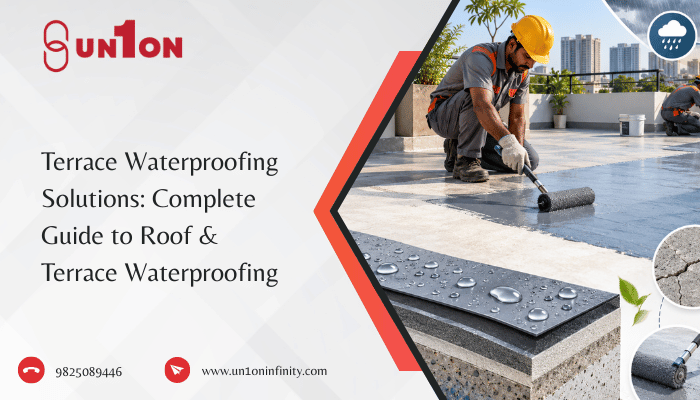
Terraces and roofs in India are exposed to intense sunlight, heavy monsoon rainfall, humidity, and frequent temperature changes. Over time, these conditions can cause cracks, damp patches, water seepage, peeling paint, mould growth, and damage to ceilings and walls.
Proper waterproofing helps protect the building structure by reducing water penetration through the roof or terrace surface. However, choosing the right waterproofing system is important because different roofs and buildings have different requirements.
This guide explains the causes of terrace leakage, popular waterproofing methods, how roof coatings work, application steps, common mistakes, and factors that affect waterproofing durability.
What Is Terrace Waterproofing and Why Is It Important?
Terrace waterproofing is the process of protecting a roof or terrace surface from water penetration. A suitable waterproofing system creates a protective barrier that helps prevent rainwater and moisture from entering the underlying concrete structure.
Waterproofing is particularly important for Indian buildings because monsoon rainfall can expose terraces to significant amounts of water over a short period.
The main benefits include:
- Reducing water seepage
- Protecting concrete from moisture
- Preventing damp patches on ceilings
- Reducing mould and algae growth
- Protecting interior finishes
- Improving roof durability
- Reducing repeated leakage repairs
| Problem Without Waterproofing | Potential Result |
| Water enters cracks | Dampness and seepage |
| Standing water | Surface deterioration |
| Moisture reaches concrete | Long-term structural concerns |
| Water reaches interior | Ceiling and wall damage |
| Repeated leakage | Frequent repair costs |
Waterproofing should ideally be considered before leakage becomes severe.
Common Causes of Terrace Water Leakage
Terrace leakage can result from several problems rather than a single issue.
Cracks in Concrete
Concrete can develop cracks because of shrinkage, thermal movement, ageing, or structural movement. Even small cracks can become pathways for water.
Poor Drainage
Blocked or incorrectly positioned drainage outlets can cause water to remain on the terrace. Prolonged standing water increases the risk of seepage.
Damaged Existing Waterproofing
Older waterproofing layers can deteriorate because of sunlight, weather exposure, foot traffic, or ageing.
Improper Slope
A terrace should allow rainwater to flow towards drainage points. Poor slope can result in water accumulation.
Construction Joints
Joints between different sections of a building can become vulnerable areas if they are not properly treated.
| Leakage Cause | Typical Warning Sign |
| Cracks | Visible cracks or damp lines |
| Poor drainage | Standing water |
| Damaged waterproofing | Peeling or blistering |
| Poor slope | Water remains after rain |
| Joint failure | Localised seepage |
Identifying the actual cause is important before selecting a waterproofing method.
Best Terrace Waterproofing Solutions for Indian Homes and Buildings
Different waterproofing systems are suitable for different roof conditions. The choice depends on the substrate, leakage severity, traffic, existing surface, and expected exposure.
Common options include:
| Waterproofing Method | Key Benefit | Suitable For |
| Cementitious waterproofing | Easy application and good substrate compatibility | Concrete terraces |
| Liquid-applied membrane | Seamless protective layer | Complex roof surfaces |
| Polymer-modified coating | Improved flexibility and adhesion | Residential terraces |
| Bituminous membrane | Strong waterproof barrier | Selected roof applications |
| PU-based system | Flexible and water-resistant | Roofs with movement |
| Waterproof protective coating | Surface-level protection | Suitable prepared roof surfaces |
For Indian homes, the system should be selected according to local rainfall, temperature, roof usage, and drainage conditions rather than simply choosing the most expensive option.
How Does a Roof Waterproofing Coating Work?
A roof waterproofing coating is applied over a properly prepared roof surface to create a continuous protective layer. Once cured, the coating can help reduce the movement of water through small surface pores and suitable cracks.
Depending on the formulation, coatings may offer:
- Water resistance
- UV resistance
- Adhesion to concrete
- Flexibility
- Crack-bridging capability
- Resistance to weathering
However, a coating cannot compensate for major structural problems or severe substrate damage. Cracks, joints, drainage problems, and loose surfaces should be assessed and repaired as required before coating.
Waterproof Coating for Roof vs. Traditional Waterproofing Methods
Both coating-based systems and traditional waterproofing methods can be effective when correctly selected and installed.
| Feature | Waterproof Coating | Traditional Waterproofing |
| Application | Usually applied directly to prepared surface | May involve multiple layers or membranes |
| Joints | Can create a seamless layer | Depends on system |
| Complex surfaces | Often easier to apply | May require detailed installation |
| Maintenance | Can be easier to inspect | Depends on system |
| Application thickness | Product-specific | System-specific |
| Surface preparation | Essential | Essential |
A waterproof coating for roof/terrace can be useful where a seamless surface treatment is appropriate. However, the condition of the existing roof should always be evaluated before choosing a coating system.
How to Choose a Waterproof Coating for Terrace
Choosing a waterproofing coating should involve more than checking whether the product claims to be waterproof.
Consider these factors:
1. Surface Compatibility
Check whether the product is suitable for concrete, cement plaster, masonry, or the existing roof surface.
2. Crack Bridging
If the terrace experiences minor movement or has small cracks, a flexible system may be more appropriate.
3. UV Resistance
Roofs receive direct sunlight for long periods. A suitable exterior product should have the required resistance to UV exposure.
4. Rain and Moisture Exposure
Choose a product designed for the expected water exposure and local weather conditions.
5. Traffic
If people regularly walk on the terrace, consider whether the selected system can withstand the expected foot traffic.
6. Application Requirements
Check whether the product requires a primer, multiple coats, specific drying intervals, or special surface preparation.
How to Apply Terrace Waterproofing Solutions
Correct application is essential for waterproofing performance.
Step 1: Inspect the Terrace
Identify cracks, damaged areas, drainage issues, loose concrete, and existing waterproofing.
Step 2: Clean the Surface
Remove dust, dirt, algae, loose particles, oil, and other contaminants.
Step 3: Repair Defects
Repair cracks, damaged concrete, joints, and other problem areas according to the recommended waterproofing system.
Step 4: Check Drainage
Make sure water can flow properly towards the drainage outlets.
Step 5: Apply Primer if Required
Some systems require a primer to improve adhesion between the substrate and waterproofing layer.
Step 6: Apply the Waterproofing System
Apply the recommended number of coats at the specified coverage rate and thickness.
Step 7: Allow Proper Curing
Each layer should be allowed to dry or cure according to the manufacturer’s instructions.
Step 8: Inspect the Finished Surface
Check for missed areas, pinholes, cracks, uneven coverage, or other visible defects before exposing the surface to heavy water or traffic.
Common Mistakes to Avoid During Terrace Waterproofing
Poor application can reduce the performance of even a high-quality waterproofing product.
Avoid these common mistakes:
- Applying waterproofing over a dirty surface
- Ignoring existing cracks
- Applying the coating too thinly
- Applying coats before the previous layer has cured
- Ignoring drainage problems
- Waterproofing during unsuitable weather
- Skipping required primer
- Not treating joints and vulnerable areas
- Applying products outside their recommended temperature range
- Assuming one coating works for every roof
Waterproofing should be treated as a complete system rather than simply applying a waterproof product over the existing surface.
How Long Does Terrace Waterproofing Last?
The lifespan of terrace waterproofing depends on the waterproofing system, surface preparation, application quality, weather exposure, roof traffic, drainage, and maintenance.
| Factor | Effect on Lifespan |
| Good surface preparation | Improves performance |
| Proper application thickness | Supports durability |
| Strong drainage | Reduces water accumulation |
| UV exposure | Can affect certain coatings |
| Heavy foot traffic | May cause surface wear |
| Regular inspection | Helps identify problems early |
| Quality repairs | Can extend system performance |
There is no universal lifespan that applies to every waterproofing system. Always refer to the manufacturer’s technical information and maintenance recommendations.
Terrace Waterproofing Maintenance Tips
Regular inspection can help identify problems before they become major leakage issues.
Check the terrace periodically for:
- New cracks
- Peeling or blistering
- Blocked drains
- Standing water
- Damaged coating
- Algae or moss
- Open joints
- Areas showing dampness below the terrace
Keep drainage outlets clear, avoid unnecessary damage to the waterproofing layer, and repair small defects according to the recommended system.
Quick Terrace Waterproofing Checklist
| Check | Requirement |
| Roof inspection | Identify leakage and damaged areas |
| Surface cleaning | Remove contaminants |
| Crack treatment | Repair relevant cracks |
| Drainage | Ensure outlets are clear |
| Primer | Use if specified |
| Coating | Apply correct quantity |
| Curing | Follow recommended time |
| Final inspection | Check coverage and defects |
| Maintenance | Inspect periodically |
FAQs About Terrace Waterproofing Solutions
What is the best waterproofing for a terrace?
The best system depends on the roof surface, leakage condition, climate, drainage, traffic, and application requirements. Cementitious, liquid-applied, polymer-modified, PU-based, and membrane systems can all be suitable for different situations.
Can waterproof coating stop terrace leakage?
A suitable coating can help prevent water penetration when the underlying surface is properly prepared and the coating is compatible with the roof. Major cracks, drainage problems, and structural defects may require additional treatment.
Is waterproofing necessary for every terrace?
Waterproofing is highly recommended for terraces exposed to rainfall and moisture because it helps reduce water penetration and protects the underlying building surfaces.
Can waterproofing be applied over old waterproofing?
Sometimes, but it depends on the condition and compatibility of the existing waterproofing layer. Loose, damaged, or poorly bonded material may need to be removed first.
Can terrace waterproofing be done during the monsoon?
Application generally requires suitable weather and a dry substrate. Follow the waterproofing manufacturer’s requirements regarding rain, humidity, temperature, and curing.
How can terrace leakage be prevented?
Maintain proper drainage, repair cracks early, inspect joints, maintain the waterproofing layer, and address signs of seepage before they become severe.
Conclusion
Effective terrace waterproofing requires more than simply applying a waterproof product. The roof should first be inspected for cracks, drainage problems, damaged surfaces, joints, and other potential sources of leakage.
The appropriate waterproofing system should then be selected according to the roof condition, environmental exposure, traffic, and required durability. Proper cleaning, surface preparation, crack treatment, application, and curing are equally important.
For Indian homes and buildings, regular terrace inspection and maintenance can further improve waterproofing performance. By choosing a suitable system and following the manufacturer’s application instructions, property owners can reduce water seepage and protect their roofs, ceilings, walls, and interiors from moisture-related damage.